

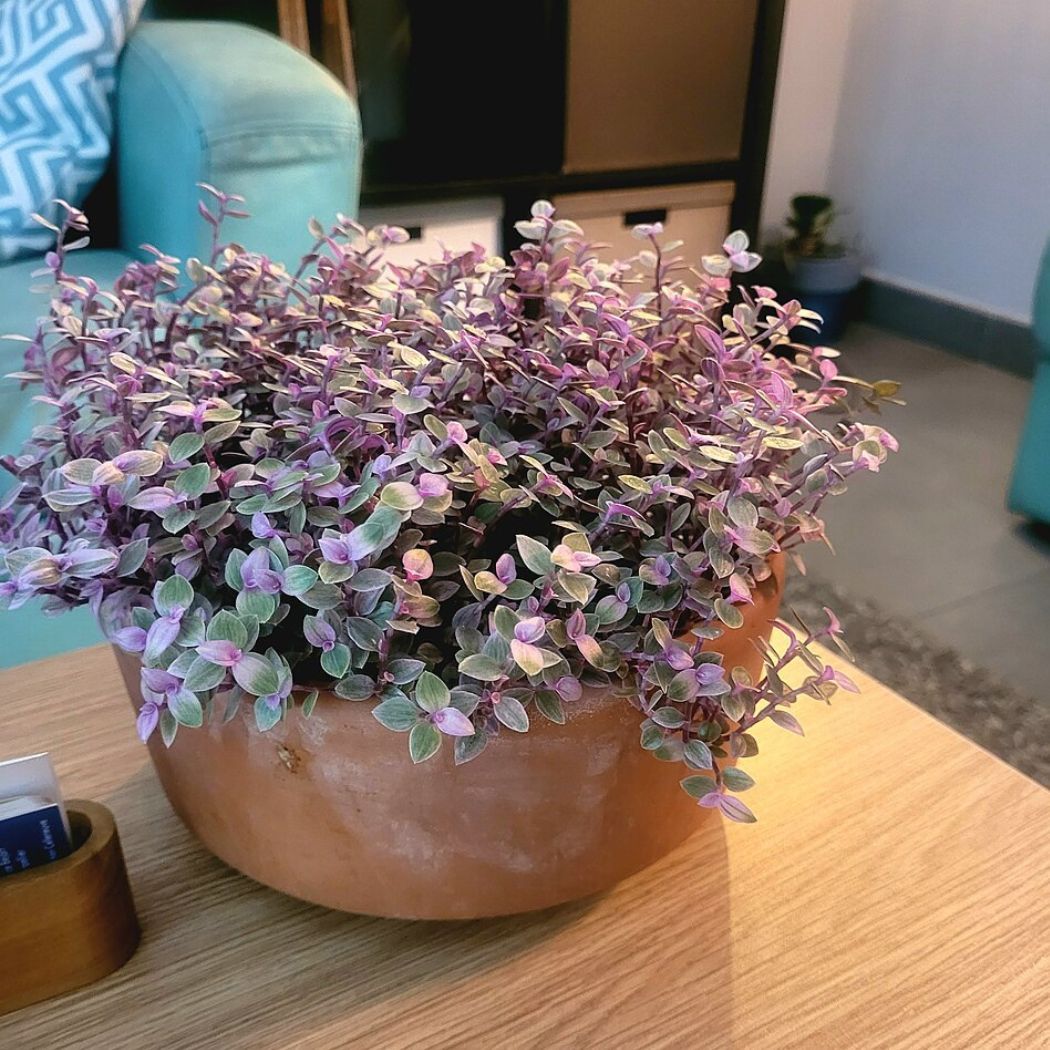


Callisia repens in a pot 19 cm.
- Leaves: Evergreen
- Water needs: Moderate requirements
- Needs for light: too much light (no direct exposure to sunlight)
- Flower pot size: 12 cm
- Plant height: 11 cm -20 cm
- Durability over time: Perennial


Product description
Latin name: Callisia repens (family Commelinaceae)
A few words: This is a low, trailing plant with small, fleshy leaves that display striking variegation in shades of green, cream and pink. In English it is also known as Turtle vine or creeping inchplant, due to its growth habit and the texture of its foliage. Callisia repens ‘Rosa’ is a strictly ornamental plant, ideal for indoor spaces, verandas and bright balconies. The pink variegation of its leaves makes it especially popular in combinations with other houseplants, in cachepots, hanging pots or shelving displays. It is also used as a groundcover in warm, frost-free climates, where it forms a low “carpet” of colourful leaves. It has no culinary or medicinal use – its value is mainly aesthetic.
Light–Water: This particular variety loves very bright, indirect light. Indoors, a spot near a window with filtered light (east- or north-facing) is ideal. It can tolerate a few hours of gentle morning or late-afternoon sun, but intense midday summer sun can cause leaf burn, especially on the pale pink/cream areas. In very low light, the plant’s colours “wash out”, the leaves turn greener and the pink variegation is reduced. As for watering, it behaves like a “succulent-type houseplant”: it needs good drainage, but slightly more frequent watering than typical succulents. Ideally, allow the top 1–2 cm of the soil to dry out lightly before watering again. From spring to autumn, it is usually watered 1–2 times per week, depending on temperature, while in winter watering is reduced, taking care that the substrate does not remain constantly soaked. Excessive dryness causes the leaves to shrivel and dry at the tips, while constant “sogginess” leads to rot in the roots and at the base of the stems.
Care tips: For best results, choose a light, well-draining growing medium, e.g. general-purpose potting soil mixed with perlite, or a succulent mix enriched with a little organic matter (compost or well-rotted manure in a small amount). The pot must definitely have drainage holes, because the tender stems of Callisia rot easily if water is left standing. Regular “pinching” at the tips of the stems also helps the plant become denser and more “cushion-like”, avoiding bare, stretched-out shoots. Fertilising can be done with a liquid fertiliser for houseplants, diluted to half the manufacturer’s recommended dose, every 3–4 weeks from spring to early autumn. In winter, when growth slows down, fertiliser is usually not needed. Make sure never to fertilise in very dry soil – water lightly before applying fertiliser. The more abundant and balanced light the plant receives, the more intensely pink and cream the leaves become. If many solid green shoots start to appear, it is best to prune them back low, in order to encourage new, variegated pink growth again.
Final tip – recommendation: You must hydrate the plant very well during the hottest periods, especially in intense summers. Always use water at room temperature. Cold water should not be used.


